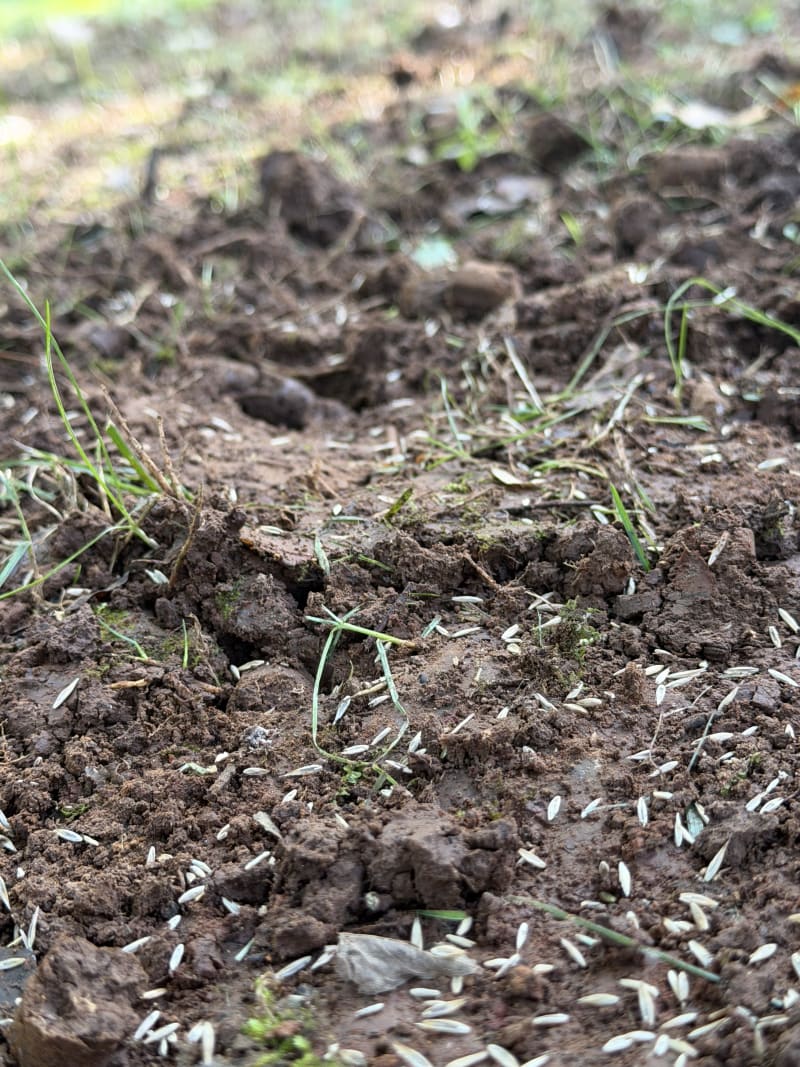
If you have a fescue lawn in North Alabama, the best time to aerate and overseed is early fall: late August through mid October, and September if you can get it. Alabama Extension's fescue guide names September to October as the best planting window for north Alabama and warns that seed planted after October may not establish before winter.
This post is the homeowner's how-to: how to tell the window has opened, how to prep, the steps in order, and how to keep new seed alive through a North Alabama fall. (If you'd rather have it done, that's our fescue aeration and overseeding service.)
How to tell the window is open
Forget the calendar for a second and watch the lawn. Fescue is a cool-season grass. ACES says cool-season grasses grow best when daytime temperatures run between 60°F and 75°F. In a typical North Alabama year that shift starts in late August or early September: nights get noticeably cooler, the fescue stops looking heat-stressed and starts putting out new growth.
That's the signal. The soil is still warm from summer, which helps seed sprout fast, and the air has cooled enough that seedlings aren't baking. Summer weeds like crabgrass are finishing up, so they aren't competing for the open soil.
What goes wrong if you push it late: seed that goes down at the end of October or in November sprouts slowly into cold soil, if it sprouts at all. The seedlings go into winter with a thin root system and come out of it weak. Seeding late is how people end up reseeding the same bare spots every spring.
What goes wrong if you go too early: the first half of August can still be brutal. Fescue seedlings don't like heat, and a hot, dry week can wipe out a whole flush of new grass.
Before you start
Get a soil test. No amount of seed fixes a pH or nutrient problem, and you can't see those by looking at the lawn. Alabama Extension runs soil testing. The Madison County Extension Office in Huntsville and the Morgan County Extension Office in Hartselle can point you to it. Ideally, test a few months ahead.
Read the seed bag. How much to spread and how to spread it are on the label. Follow it. More isn't better.
Flag what's underground. Sprinkler heads, shallow irrigation lines and invisible dog fence wires. The tines go 2 to 3 inches down and will find them.
Water the day before if it's been dry. Dry red clay is like brick. Tines barely dent it, and you get dimples instead of cores. You want it moist, not soggy.
Mow a little shorter than usual. Not scalped. Just enough that seed can get down to the soil instead of sitting on top of the grass blades.
The steps, in order
1. Core aerate. Use a core aerator that pulls plugs, not a spike aerator that just pushes holes (our post on core vs. spike aeration explains why). Clemson Extension's aerating guide describes tines 2 to 3 inches deep, spaced 2 to 3 inches apart. On thin or badly compacted clay, run a second pass at an angle to the first, so the holes don't end up in stripes and the seed lands on open soil across the whole lawn.
2. Leave the cores. Don't rake them off. They'll break down and help cover the seed.
3. Spread the seed the same day. Alabama Extension's fall lawn tips note that aerating right before seeding improves seed-to-soil contact. The holes are the point. Seed that falls into and around them is sitting in loose soil instead of on top of hard clay. Split the seed into two half-passes at right angles to each other, so you don't get stripes or bare lanes.
4. Water it in. A light watering right away settles the seed into the holes.
5. Stay off it. Kids, dogs and wheelbarrows can wait a few weeks.
What goes wrong: spreading seed on top of unaerated clay. The seed sits on a hard surface, birds eat some, rain washes some into the low spots, and the rest sprouts roots that can't get in. That's the most common reason overseeding "didn't take".
Watering new seed: the part that decides everything
UGA Extension's fall seeding advice is to keep the top 1 to 2 inches of soil moist, not wet, which usually means about 1/10 to 1/4 inch of water a day for the first three weeks.
In practice:
- Short runs, not long soaks. A few minutes per zone, once or twice a day depending on sun and wind. A September afternoon in full sun dries the surface faster than you'd think.
- Watch the low spots. If water is puddling or running down the driveway, you're watering too long per run. Runoff carries seed with it.
- Skip it when it rains. Don't pile a sprinkler cycle on top of a storm.
- Taper off once it's up. UGA says seed germinates in 5 to 10 days under good conditions. Once most of it is up, water less often but deeper, so the roots chase the moisture down into the aerated soil.
Leaves: the North Alabama problem
Here's the timing problem nobody warns you about. You seed in September, and by the middle of October the oaks, maples and sweetgums start dropping. In the older neighborhoods of Huntsville, Decatur and Hartselle, that's a lot of leaves landing on a lot of new grass.
A wet layer of leaves blocks the light and holds moisture against the seedlings. Leave it for a week and you can lose patches of new fescue underneath.
- Blow, don't rake, for the first few weeks. A leaf blower moves leaves without ripping up seedlings with shallow roots.
- Stay on it. Every few days during peak drop beats one big cleanup.
- Mulch later. Once the new grass has been mowed a couple of times, mulching leaves with the mower is fine and returns organic matter to the soil.
The first mow
UGA says new fescue is usually ready for its first mow 2 to 3 weeks after germination. When it's tall enough to cut:
- Mow high while the new grass establishes. Don't cut it short.
- Sharp blade, dry grass. A dull blade tears young seedlings out of loose soil instead of cutting them.
- Keep mowing high through fall. Taller grass shades the soil and helps keep weeds out.
Hold off on pre-emergent
Pre-emergent weed killers stop seeds from sprouting. They can't tell weed seed from grass seed. So:
- No fall pre-emergent on a lawn you just overseeded.
- In spring, read the label before applying one. Many say to wait until new grass has been mowed several times. If a lawn care company treats your lawn, tell them you overseeded.
What to expect (honestly)
For the first two or three weeks, the lawn looks worse. Cores, holes, bare-looking seed, uneven sprouting. That's normal. By late fall you should see new grass filling in the thin spots, and it'll keep rooting through the mild days of winter and early spring. Clemson recommends allowing at least four weeks of good growing weather after aerating, and early fall gives you that with room to spare.
Two limits worth saying out loud:
- One fall won't turn a thin lawn into carpet. A lawn that's been thinning for years on compacted clay may need this two or three falls running.
- Seed can't beat deep shade. Fescue handles light to moderate shade far better than Bermuda, but under a dense canopy even fescue struggles. Thinning branches to let in light may do more than more seed.
Have Bermuda or Zoysia instead? Don't overseed it with fescue. Aerate it in late spring or summer instead. See Bermuda and Zoysia aeration and our post on when to aerate your lawn. For the day-after routine on any lawn, see what to do after aerating.
Around North Alabama
This window holds for fescue lawns across Huntsville, Madison, Decatur and Hartselle. If you'd rather not do it yourself, call or text and ask about fescue aeration and overseeding.