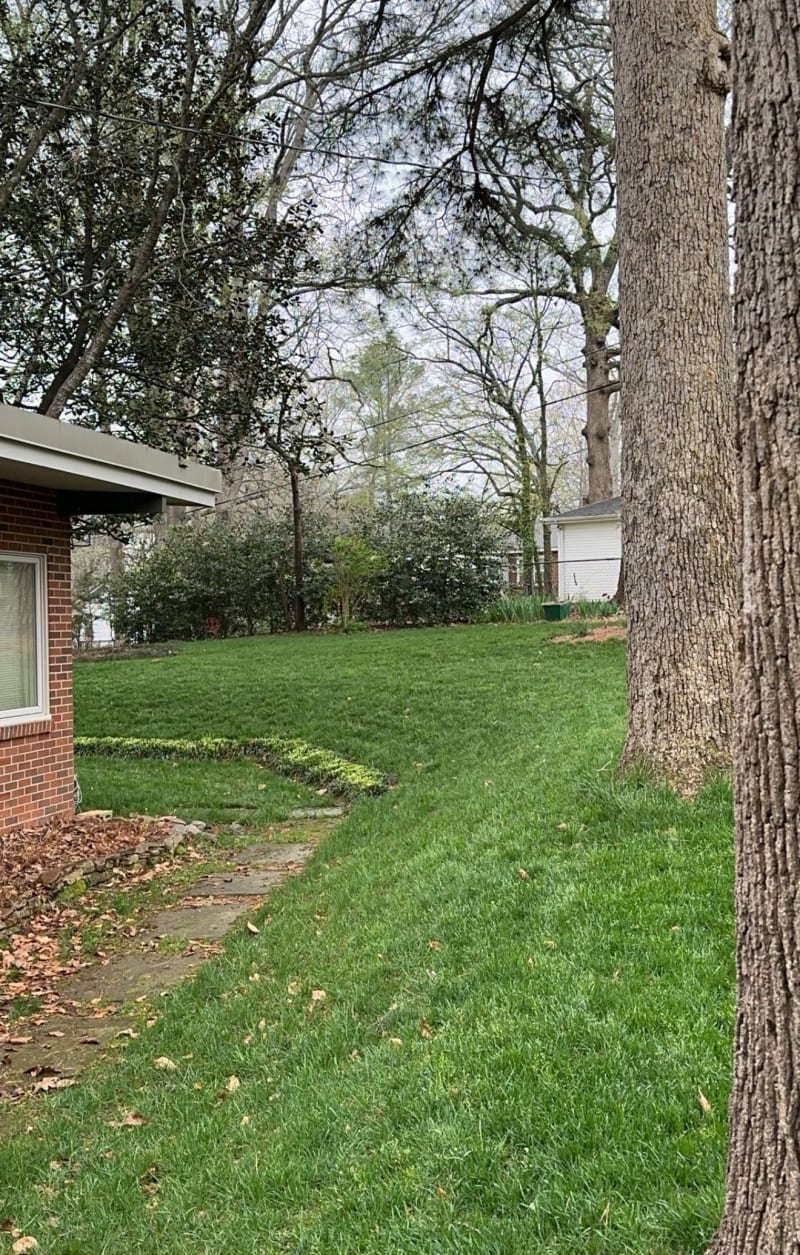
The short answer: aerate when your grass is growing hardest. In North Alabama that means fescue in early fall (late August through mid October, and September is the sweet spot), and Bermuda or Zoysia from mid/late April through August, once the lawn has fully greened up. Aerate the wrong grass at the wrong time and the holes just sit there. Weeds move in instead of roots.
That's the whole rule. The rest of this post is why, plus the details that decide whether an aeration actually does anything.
Why timing matters more than the machine
Core aeration pulls plugs of soil out of the lawn and leaves them on top. Clemson Extension's aerating guide puts the typical tines at 2 to 3 inches deep and 1/4 to 3/4 inch across, spaced 2 to 3 inches apart. That's a lot of small holes. Air, water and roots can finally get into soil that was packed tight.
But a hole is also an open wound in the turf. The grass has to grow back over it. Clemson recommends allowing at least four weeks of good growing weather after aerating so the lawn can recover. That single number explains the whole calendar: you aerate at the start of a stretch when your particular grass will be growing well for a month or more.
Fescue and Bermuda grow well at opposite times of year. So they get aerated at opposite times of year.
Fescue: late August to mid October
Fescue is a cool-season grass. The Alabama Cooperative Extension System says in its fescue guide that cool-season grasses grow best with daytime temperatures between 60°F and 75°F, and that September to October is the best time to plant fescue in north Alabama. Seedlings planted after October may not establish before winter.
That's why fescue aeration happens in fall, not spring:
- The grass is waking back up. Fescue struggles through a North Alabama July. When the nights cool off in late August and September, it starts growing again and can fill the holes fast.
- Weeds are winding down. Crabgrass is a summer annual. By September it's done for the year, so it can't take advantage of the open soil.
- It's the only good window to seed. If your fescue is thin, overseeding right after aeration puts seed straight into the holes. ACES's fall lawn tips call September the preferred time to aerate fescue, especially if seed is going down, because aerating just before seeding improves seed-to-soil contact.
What goes wrong in spring: aerate fescue in March or April and you've opened thousands of holes right as crabgrass is about to germinate. Any seed you add has one spring to put down roots before a Huntsville summer tries to kill it. Plenty of it won't make it.
So, fescue in fall. For the full how-to, see our fall aeration and overseeding guide. If you'd rather have it done, that's our fescue aeration and overseeding service.
Bermuda and Zoysia: mid/late April through August
Bermuda and Zoysia are warm-season grasses. They go tan after the first hard frost, green up in spring and grow hardest in the heat. Clemson Extension's aerating guide puts warm-season aeration in late spring through summer, and its Bermudagrass calendar lists core aeration from May, after the lawn has fully greened and is actively growing.
That phrase matters. North Alabama Bermuda is often half green and half straw in early April. Aerating a lawn in that state stresses it right when it has the least energy to recover, and the bare holes are an open invitation to spring weeds.
A rough guide for warm-season lawns here:
- Mid/late April: only if the lawn is mostly green and you've mowed actual growth, not just dead tips.
- May through July: the easiest months. Bermuda fills holes in quickly when it's hot.
- August: still fine. The lawn has September to heal before it slows down.
- September on: skip it. There isn't four weeks of strong growth left before dormancy.
Zoysia is slower than Bermuda. It still recovers, just not as fast, so earlier in the season is kinder to a Zoysia lawn than late August.
One thing you should not do: overseed Bermuda or Zoysia with fescue to "thicken it up". It doesn't blend. You get fescue clumps that look out of place in summer and green spots on a tan lawn in winter. Thicken a warm-season lawn by helping it spread. Details are on our Bermuda and Zoysia aeration page.
The late-August overlap
Late August is the one time both grasses are in play. Bermuda is still growing hard, and fescue is about to take off. If your yard has both (and plenty of North Alabama yards do), it's a legitimate time to do the whole lawn. Fescue in the shade under the oaks, Bermuda out front in full sun.
If you're not sure which grass you have: fescue stays green all winter and grows in clumps. Bermuda and Zoysia turn tan after the first hard frost and spread by runners. Bermuda will creep across your sidewalk. Zoysia feels thick and stiff underfoot.
What red clay changes
Most of the Tennessee Valley sits on red clay. ACES describes the valley soils as mainly red clay under a silt-loam surface. Clay does two things that affect timing.
It packs down harder. Mowers, kids, dogs, parked cars and, above all, construction equipment. Newer yards in Madison and Huntsville are often sod laid over graded, compacted subsoil, which is why so many of them stay thin however much you water them. Those lawns benefit most from aerating every year, on the right schedule for the grass.
It swings between brick and putty. Dry August clay is hard enough that tines barely scratch the surface. You get shallow dimples, not cores. Soaked clay after a thunderstorm smears, and the holes close themselves up. What you want is moist. If it hasn't rained, water the day before, and you'll pull full-length cores instead of crumbs.
A few honest limits
Aeration is one of the best things you can do for compacted clay. It isn't magic.
- It won't fix grading. If water sheets off a slope or pools in a low corner, the holes help it soak in a bit better. They don't change where the water goes.
- One pass doesn't undo years of compaction. Clay packs back down. Most lawns do well with aeration once or twice a year, and a badly compacted new-build yard may need it several years running.
- Shade still wins. Aerating a lawn under dense Decatur or Hartselle oaks helps the fescue, but no timing will make Bermuda grow in deep shade.
If you're comparing machines, our post on core vs. spike aeration covers why pulling cores beats poking holes.
The North Alabama aeration calendar
| Grass | When to aerate | Best months | Overseed? |
|---|---|---|---|
| Fescue | Late August to mid October | September | Yes, right after aerating |
| Bermuda | Mid/late April to August, once fully green | May to July | No fescue seed |
| Zoysia | Mid/late April to August, once fully green | May to July (earlier is better) | No fescue seed |
| Mixed yard | Each area in its own season, or late August | Late August | Fescue areas only |
Where this applies
This calendar holds across Huntsville, Madison, Decatur and Hartselle. What changes from town to town is the ground and the shade, not the grass biology. Each city page covers what's different about lawns there.
Not sure what you've got? Call or text and ask.