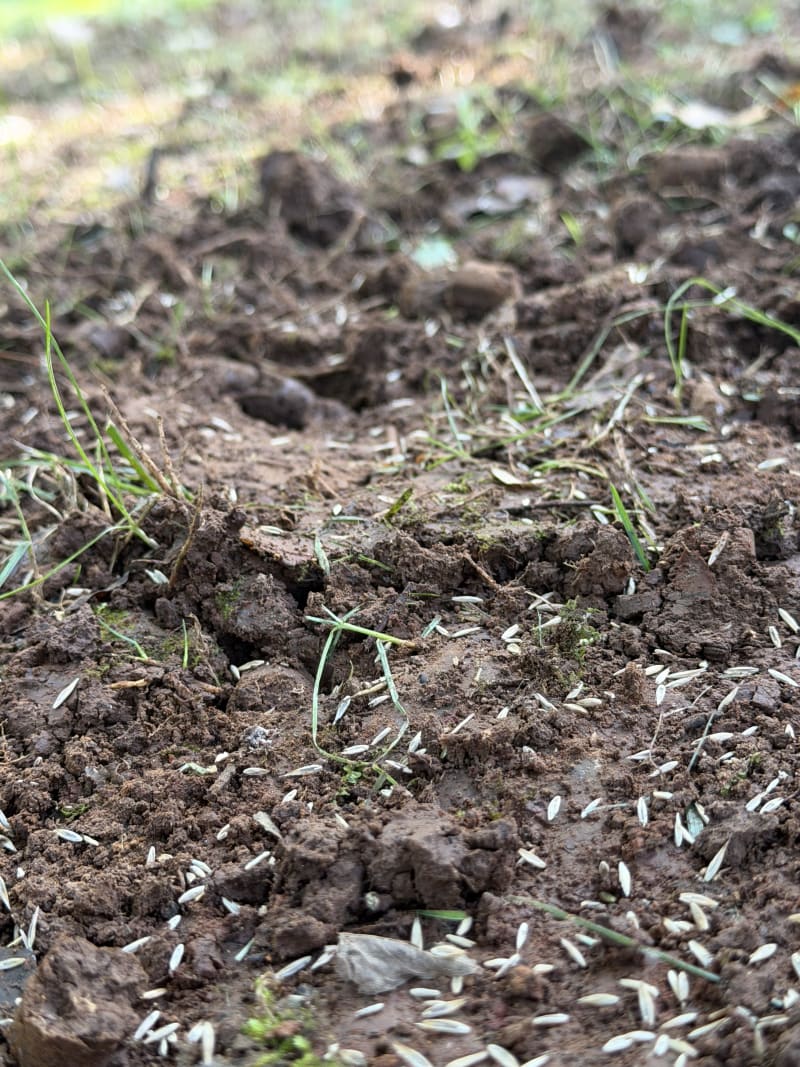
Right after an aeration, your lawn looks like a flock of geese walked across it. Thousands of little soil plugs everywhere. That's normal, and the best thing you can do for most of them is nothing.
Here's the short version of what to do after aerating a lawn:
- Leave the plugs where they fell.
- Water within a day or two if it doesn't rain.
- Mow on your normal schedule once the plugs are dry, unless you overseeded.
- If you overseeded fescue, switch to the new-seed routine: light daily watering, no pre-emergent, keep off it, and keep the leaves off it.
And because half of a good aeration happens before the machine shows up, there's a before-you-aerate checklist at the end.
Leave the plugs alone
The plugs are cores of your own soil, pulled out by tines that Clemson Extension's aerating guide describes as 2 to 3 inches deep and 1/4 to 3/4 inch across. Clemson's advice is to leave them on the lawn to be broken up by rain and traffic. They carry microbes that help break down thatch, and the soil works its way back down into the turf.
Don't rake them up. Raking them off throws away the soil you just loosened. Don't bag them either.
How long they last depends on the weather and your soil. In a rainy stretch they melt away fast. North Alabama red clay is stickier: clay cores can sit there looking like little bricks through a dry spell, then vanish after one good storm. If they bother you, mow over them once they're dry, and the mower will crumble them.
What goes wrong: mowing them while they're wet. You'll smear clay across the grass and gum up the underside of the mower. Wait until they're dry and crumbly.
Water, but don't drown it
An established lawn with no new seed doesn't need anything special. If it doesn't rain in the next day or two, give it a good, deep watering. The holes let water get down to the roots instead of running off the top, which is half the point of aerating clay in the first place.
Then go back to your normal watering. Watering deep and infrequently is better for roots than a little every evening.
If you overseeded, it's different. New seed can't dry out. UGA Extension's fall seeding advice is to keep the top 1 to 2 inches of soil moist, not wet, which usually means about 1/10 to 1/4 inch of water a day for the first three weeks. In practice that's short runs of the sprinkler, sometimes twice a day on a warm, windy September afternoon. Long soakings wash seed into the low spots, and you get thick clumps in the dips and bare patches everywhere else.
Once the new grass is up and growing, water less often and more deeply. That pushes roots down into the ground you just opened up.
When to mow
No new seed: mow as usual once the plugs are dry. Don't scalp it. Keep your normal height.
Overseeded: hold off. UGA says fescue seed germinates in 5 to 10 days under good conditions and is ready for its first mow in 2 to 3 weeks. When you do mow, mow high, use a sharp blade and mow when the grass is dry. Young seedlings tear out of soft soil easily. A dull blade rips them instead of cutting them.
Fertilizer, weed control and the rest
- Fertilizer: stay on your normal schedule for your grass. On actively growing Bermuda or Zoysia in summer, the holes help whatever you apply reach the roots. If a lawn care company handles your fertilizer, tell them the lawn was aerated.
- Pre-emergent weed killer: if you overseeded, skip it. Pre-emergents can't tell weed seed from grass seed. That goes for a fall application now, and in spring read the label, because many say to wait until new grass has been mowed several times. If you didn't seed, you can stay on your normal schedule.
- Traffic: an established lawn can be used normally. Walking on it helps break up plugs. Overseeded areas need a few weeks with as little foot, kid and dog traffic as you can manage.
- Leaves: this one is for the fall crowd. In Decatur, Hartselle and the older parts of Huntsville, the leaves come down right as new fescue is getting started. A mat of wet leaves blocks light and smothers seedlings. Blow them off regularly. A blower is gentler than a rake on young grass.
Summer aeration on Bermuda and Zoysia
Warm-season aftercare is simpler, because the grass is doing the work. Bermuda aerated in June is growing hard enough to push runners and roots straight into the holes, and they close up over the next few weeks.
The one thing to watch is heat. A North Alabama July can go two weeks without a real rain, and freshly aerated clay dries out fast because you've just opened it to the air. If the lawn starts to look dull or the footprints stay pressed in, water deeply. Early morning is best, so less of it evaporates before it soaks in.
Zoysia is slower. Expect the holes to take longer to disappear than they would in Bermuda. More detail is in our post on aerating Bermuda and Zoysia lawns.
What the lawn looks like for the next month
Honestly? A little worse before it looks better. For the first week or two you'll see plugs and holes, and a freshly seeded lawn looks patchy while the seed comes up unevenly. Clemson recommends allowing at least four weeks of good growing weather for the lawn to recover. That's why timing matters. Fescue gets aerated in early fall and Bermuda in late spring and summer, so the recovery happens while the grass is growing hard. Our post on when to aerate your lawn has the full calendar.
Before you aerate: the prep that makes it work
Most of what decides a good aeration happens the day before.
Mark what's hidden. Sprinkler heads, shallow irrigation lines and invisible dog fence wires. Tines going 2 to 3 inches down will find them. Plenty of newer yards in Madison and Huntsville have sprinkler systems and invisible pet fences, and the lines can sit just under the sod. Flag them, or tell whoever is aerating where they run.
Water the day before if it's been dry. This is the big one on red clay. Dry clay is so hard the tines barely go in, and you get shallow dimples instead of real cores. Soaked clay is the opposite problem: it smears, and the holes squeeze shut. You want it moist, like a wrung-out sponge.
Mow first. For a straight aeration, mow at your normal height. If seed is going down afterward, mow a little shorter than usual, but don't scalp it, so the seed can reach the soil.
Clear the yard. Toys, hoses, dog runs and anything that might hide in tall grass.
The honest limits
Aeration opens compacted soil. It won't fix a yard that's graded toward the house or a low corner that holds water after every storm. And one pass doesn't undo years of compaction on Tennessee Valley clay. Clay packs back down, so most lawns do well aerated once or twice a year.
Want it done for you?
We aerate fescue lawns in the fall and overseed them right after (fescue aeration and overseeding), and we aerate Bermuda and Zoysia lawns from mid/late April through August (Bermuda and Zoysia aeration). We work in Huntsville, Madison, Decatur and Hartselle. Call or text and ask.